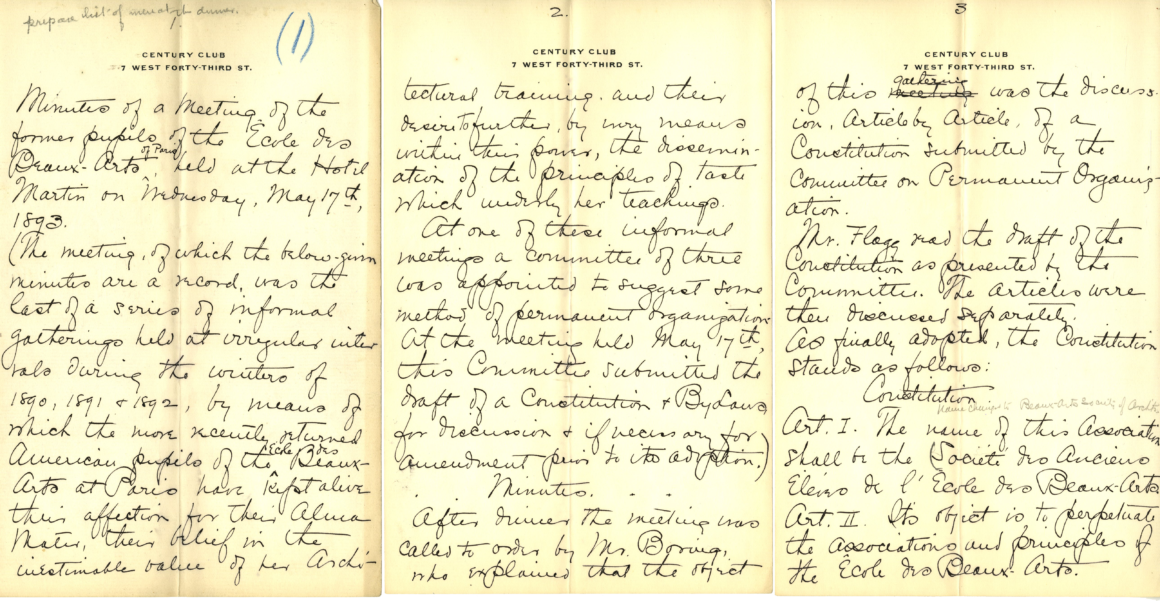
Notes from the founding meeting of the Society of Beaux-Arts Architects in 1893. The mission of the Society was to cultivate, perpetuate, and test the teachings of Beaux-Arts architecture. The SBAA would soon become the Beaux-Arts Institute of Design, and then the National Institute for Architectural Education, and finally the Van Alen Institute.
"We are not taught to build as Mr. Wright urges and as the Germans are doing at the Bauhaus - No! we are shown how to play a clever game on paper."
Simon Breines (1906–2003) was a student who participated in Beaux Arts Institute of Design programs and went on to become a noted architect of civic buildings in New York City. His 1930 letter voicing discontent at the ways architecture was then being taught is an early sign of the changes that would soon usher in modernism and the end of the Beaux-Arts.
Letter from Sherley W. Morgan at Princeton urging the Beaux Arts Institute of Design to turn away from school competitions. By the late 1930s architectural education was already moving away from the atelier system towards more developed university programs.
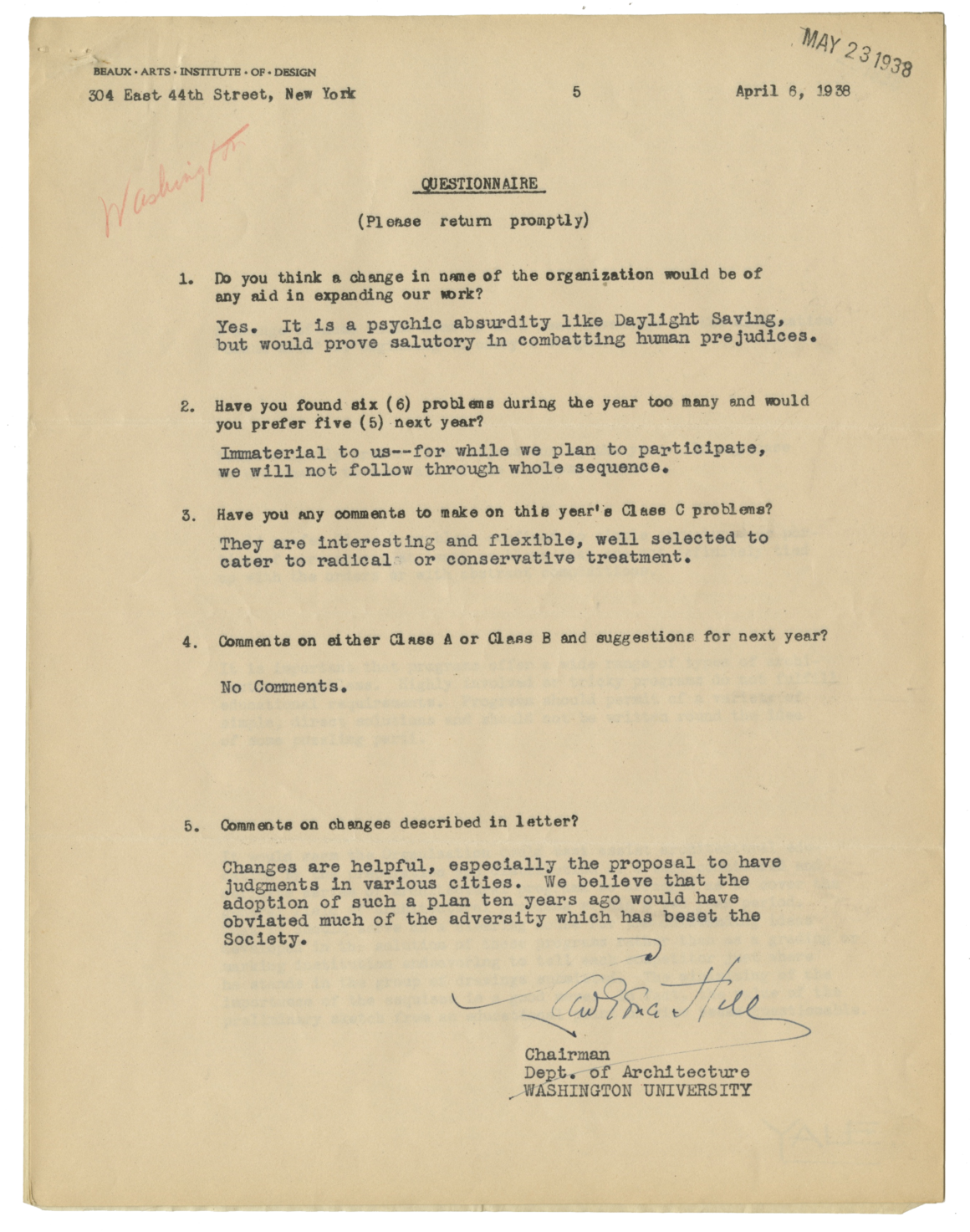
In 1938 the Beaux Arts Institute of Design (BAID) sent out a questionnaire to participating universities asking for an opinion on changing the name of the organization.
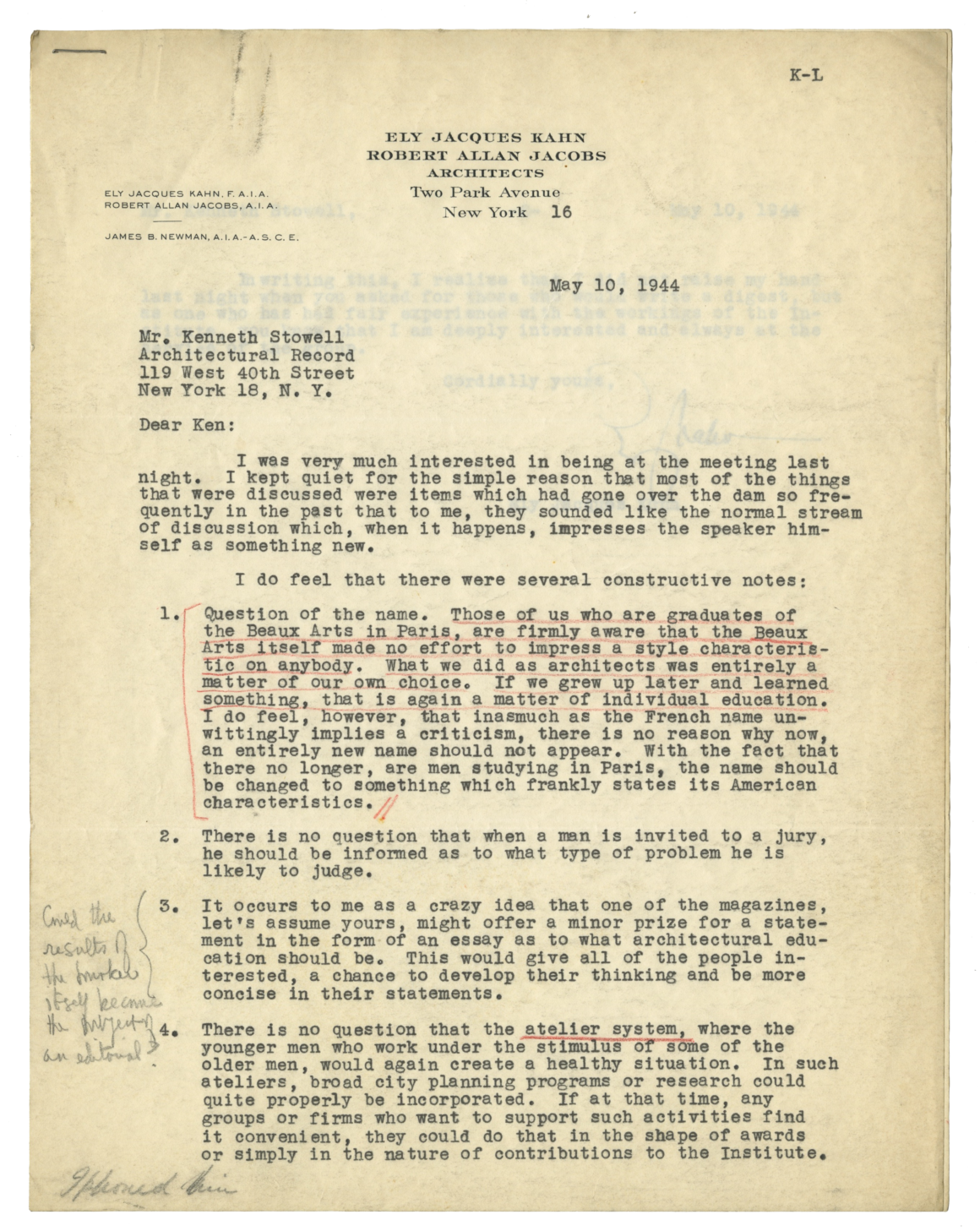
A letter from Ely Jacques Kahn advocating for a new name for the institution that "frankly states its American characteristics."
A list of ideas to improve Beaux Arts Institute of Design's effectiveness, including a change of name to erase reference to the Beaux-Arts
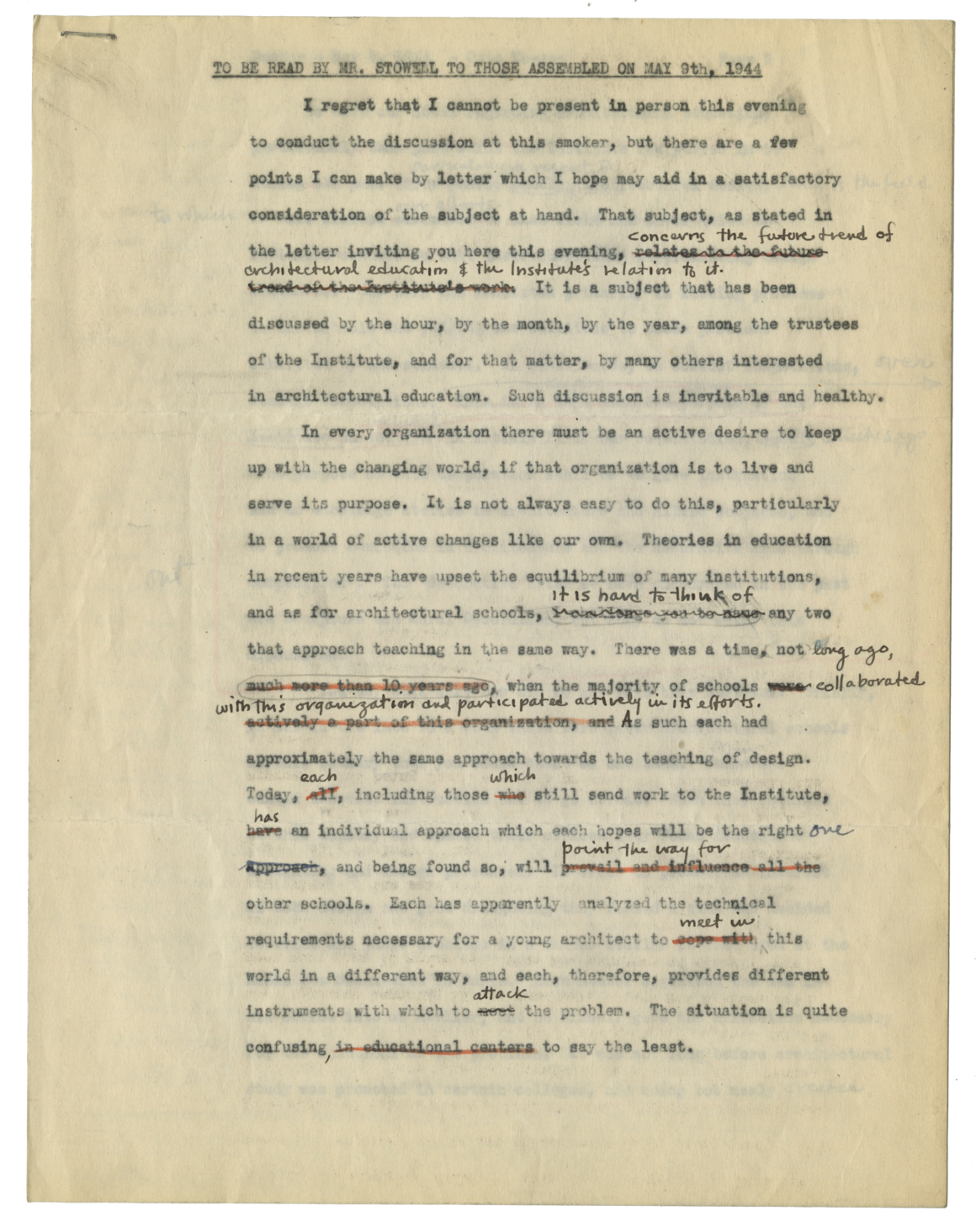
A draft of a speech by Otto Teegan in which he advocates for the need to keep pace with changes in architectural education.
Report of the Board of Trustees written by Otto Teegan, the chairman at the time, in which he questions the desirability of sending students to Paris. Modernism had reached the U.S. and students no longer wanted to study in the Beaux-Arts style.
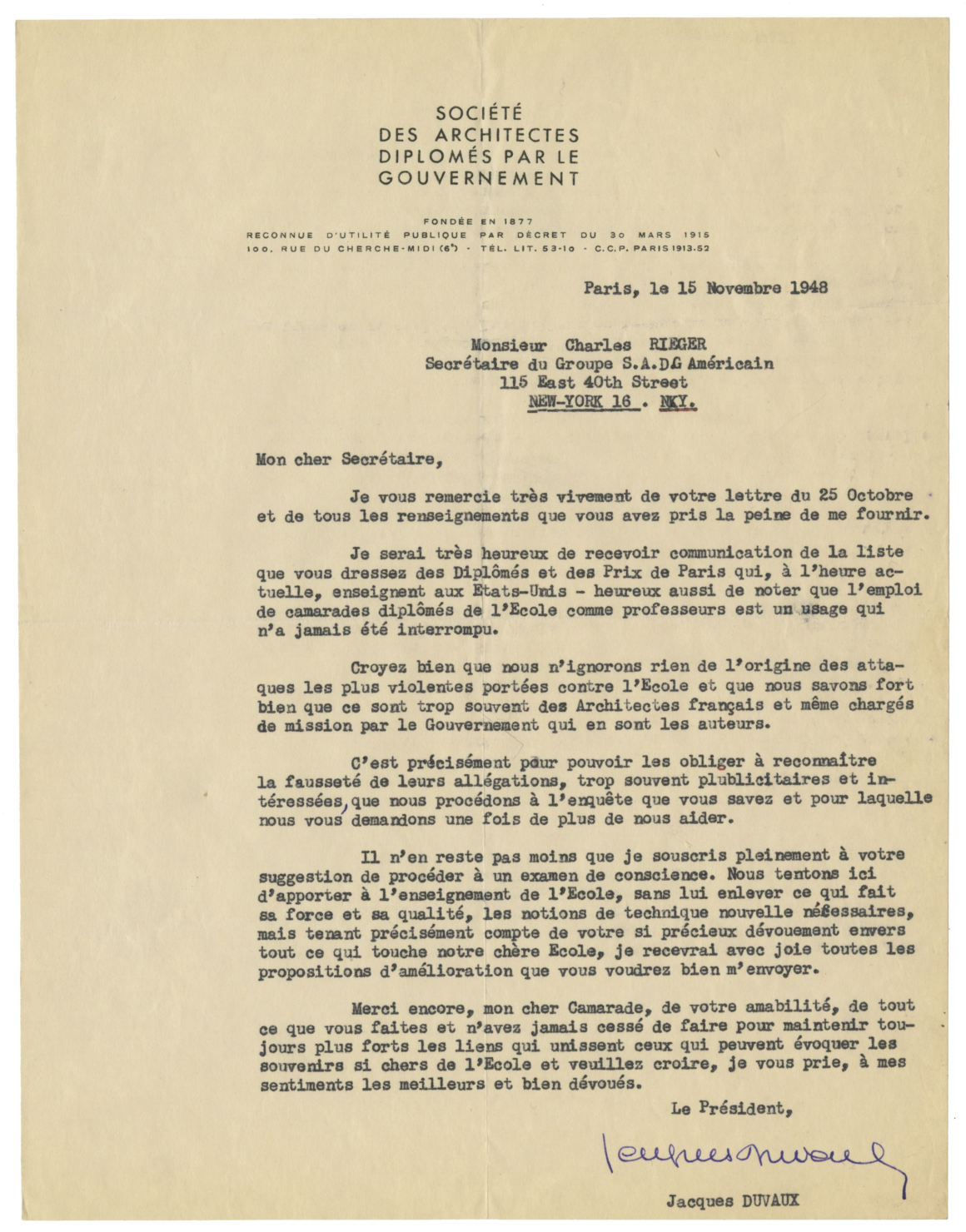
A letter from the head of the Ecole de Beaux-Arts in Paris describing attacks on the Ecole and a need to modernize.
A list of potential new names for the organization. After much debate, the organization was renamed as the National Institute of Architectural Education.
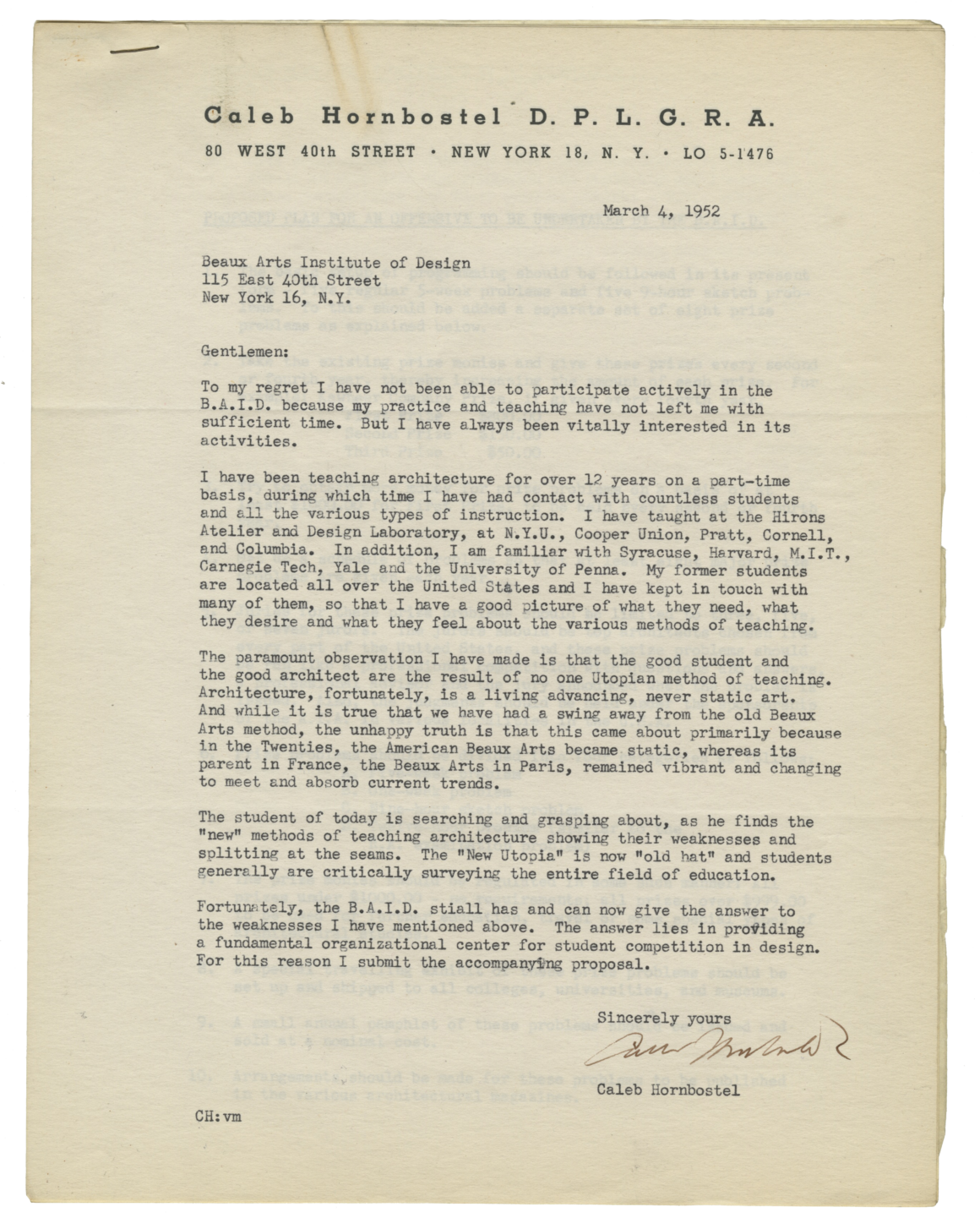
"the American Beaux-Arts became static, whereas its parent in France ... remained vibrant and changing to meet and absorb current trends."
A letter from Caleb Horbostel sharing a teacher's perspective on the state of architectural education and attitude among students.
A 1952 newsletter that includes a report from a meeting of Collegiate Schools of Architecture in Chicago with the note that it was "reeking with Anti-Beaux-Arts-itis"
A Report to the Trustees of the Beaux Arts Institute of Design with suggestions for the future of BAID programs and competitions.
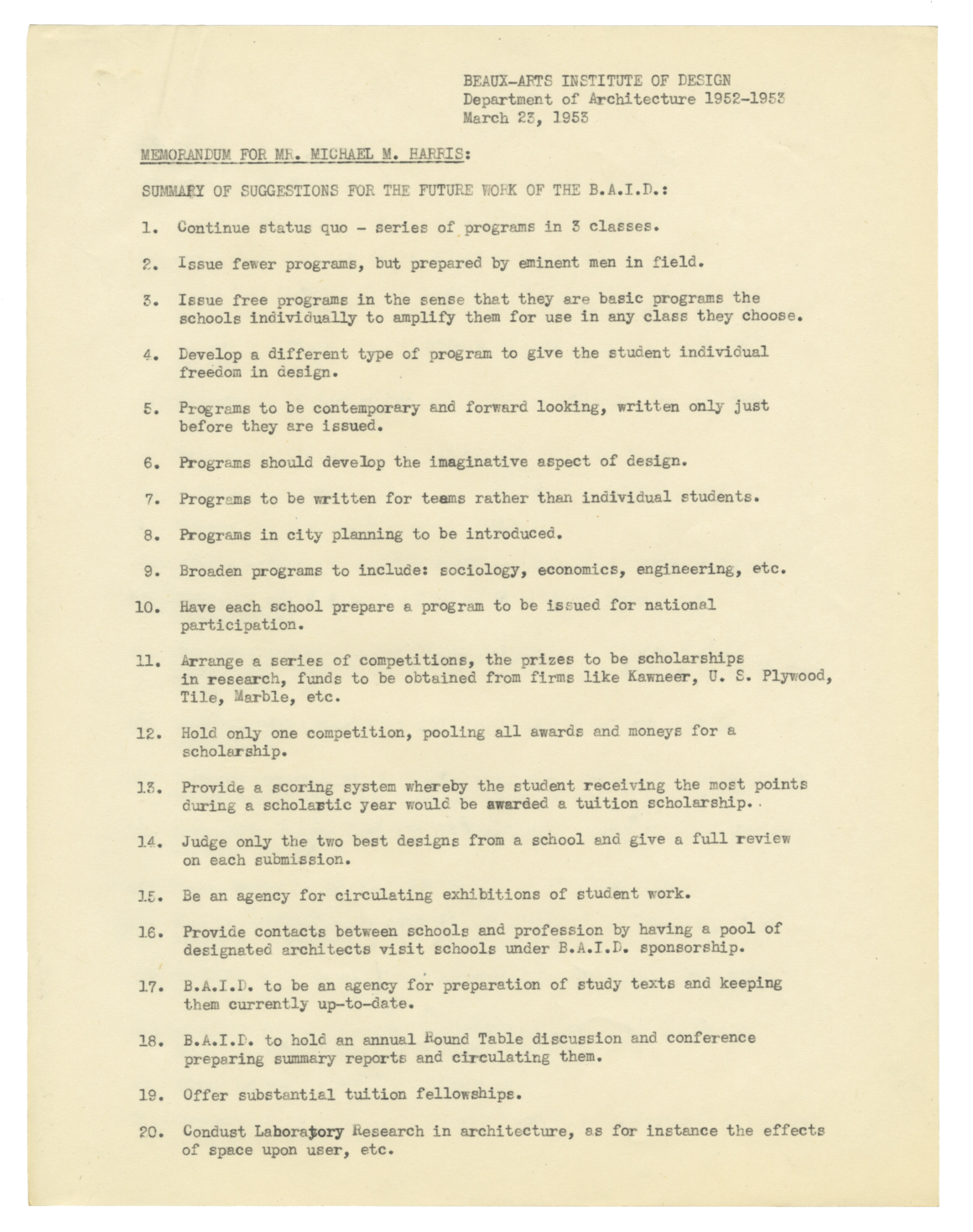
A list of 20 suggestions for future work at the Beaux Arts Institute of Design. At the mid-century the BAID was not only considering a new name but was also deeply questioning its work and purpose.
A 1955 newsletter announced the decision to change the name of the organization. The Beaux Arts Institute of Design requested suggestions for the new name from its members.
Withering BAID? A 1955 newsletter questioned the future of the Beaux Arts Institute of Design and presented a report from a meeting of educators discussing the state of architectural education.
A 1956 newsletter addresses member's reactions to the proposed name change.
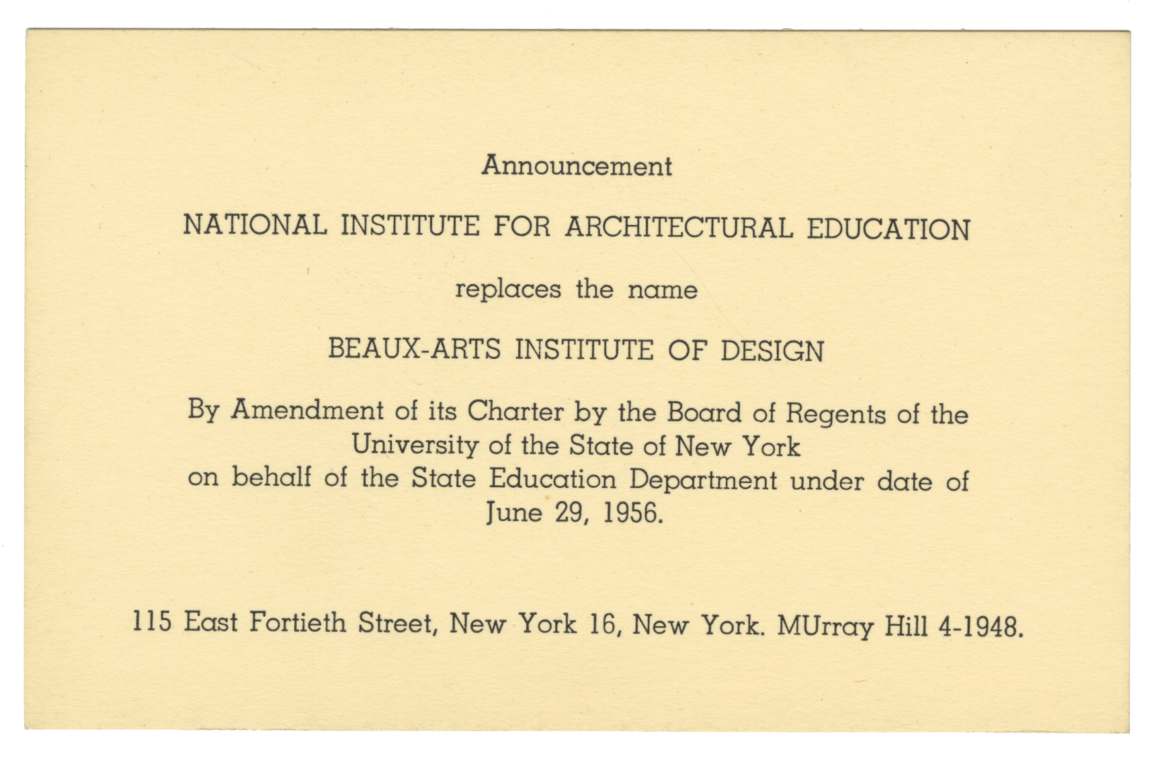
Official announcement of the name change of the Beaux-Arts Institute for Design to the National Institute for Architectural Education.
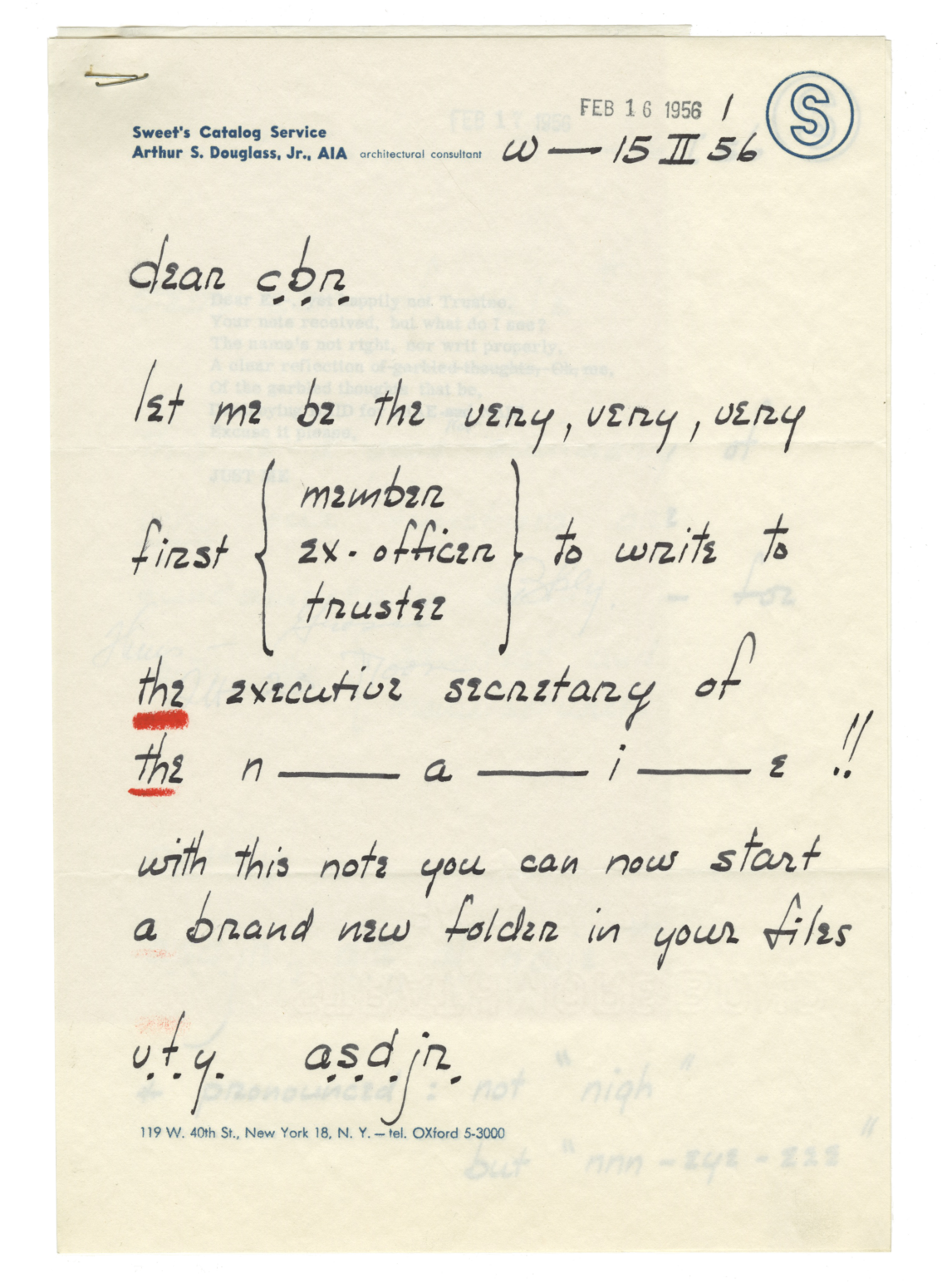
Letter of congratulations to the newly named NIAE.
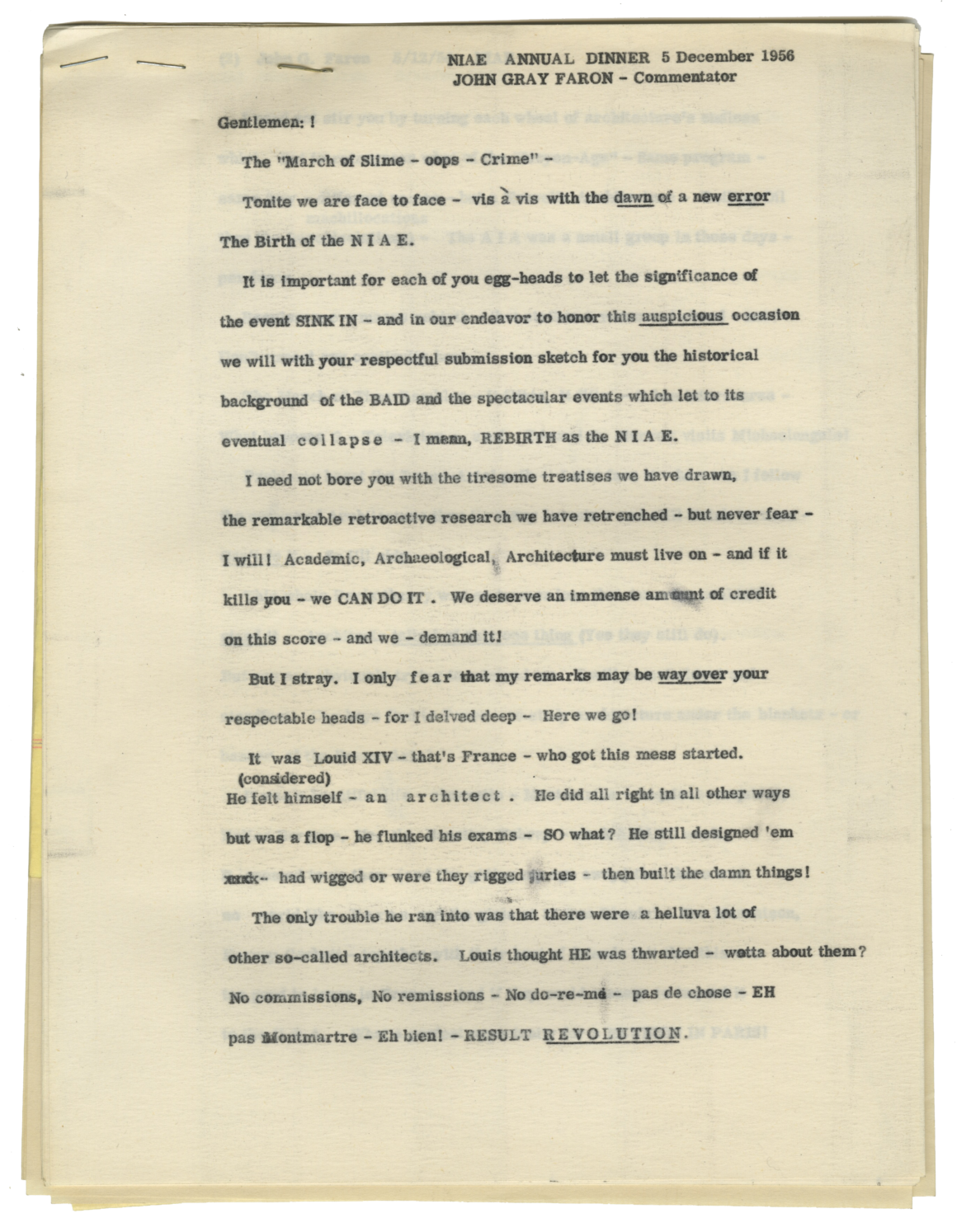
A joke speech for the newly named NIAE given at the 1956 annual dinner.
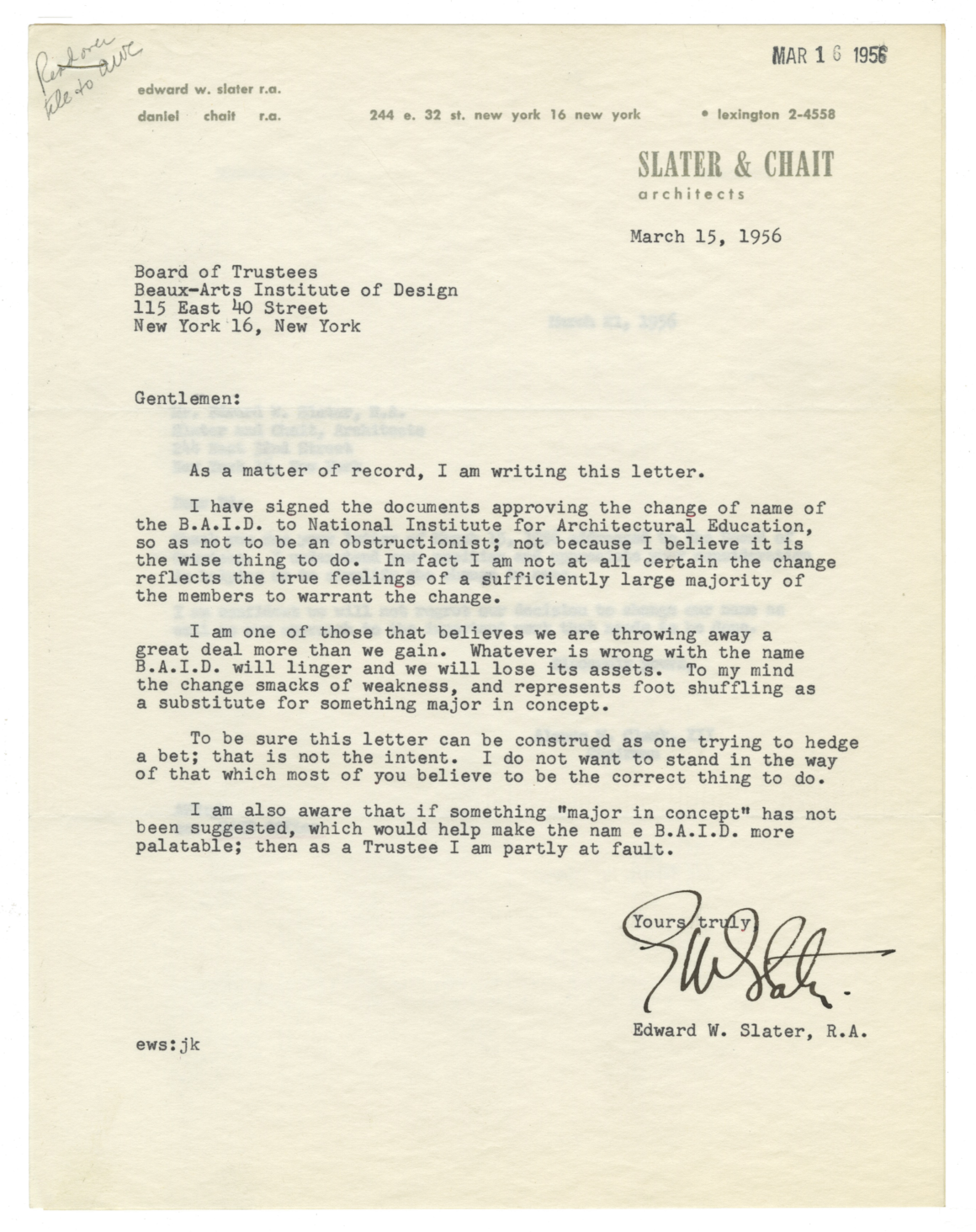
Letter from Edward Slater lamenting the institutional name change, "whatever is wrong with the name BAID will linger and we will lose its assets."
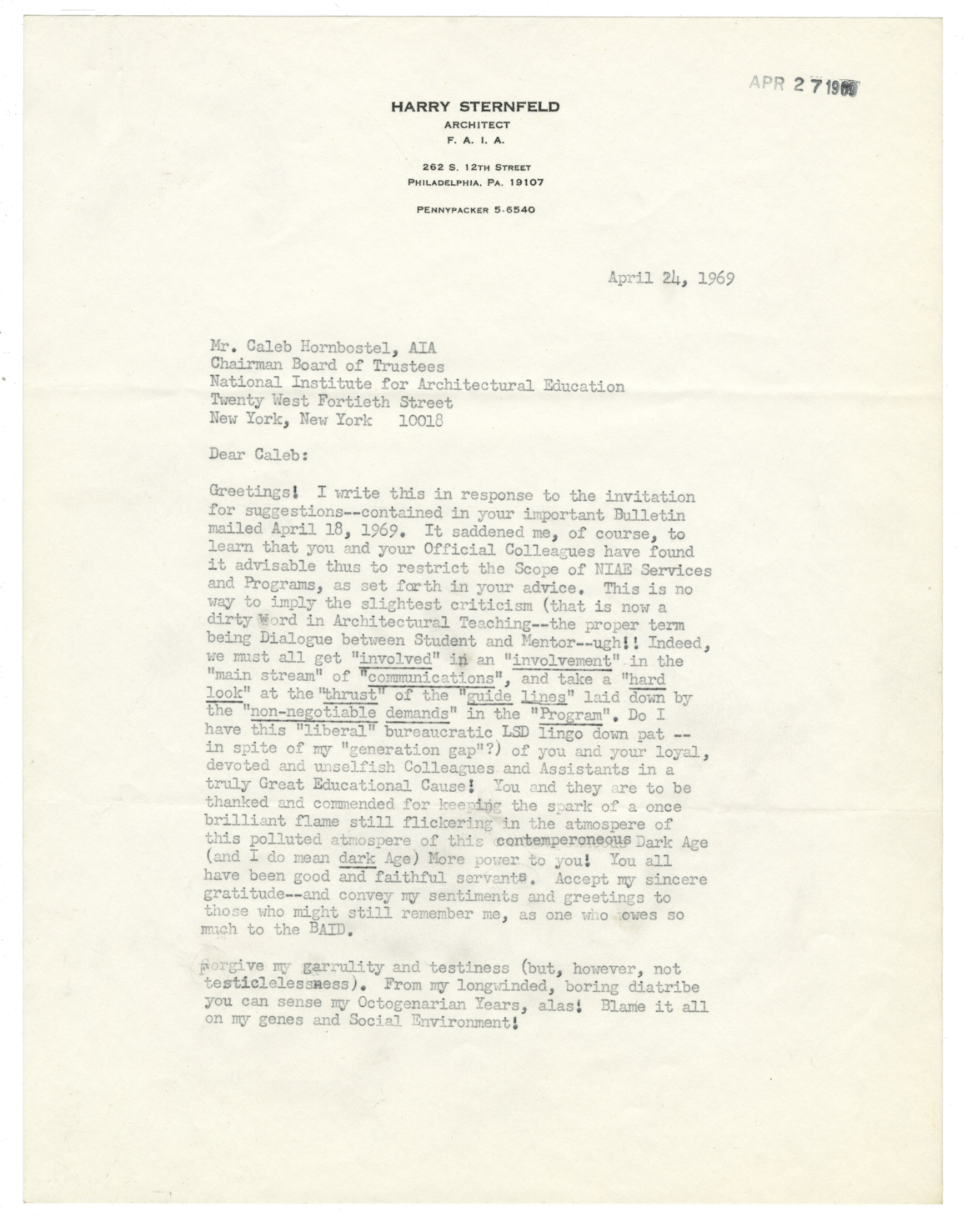
A snarky letter from Harry Sternfeld in reaction to the announcement of the change of name.
An excerpt from a 1983 bulletin that reflects on the decline of the Beaux-Arts in the context of the current discussion over post-modern vs. contemporary architecture.