You're using an unsupported browser. This site may not look optimal.

A Woman’s Place

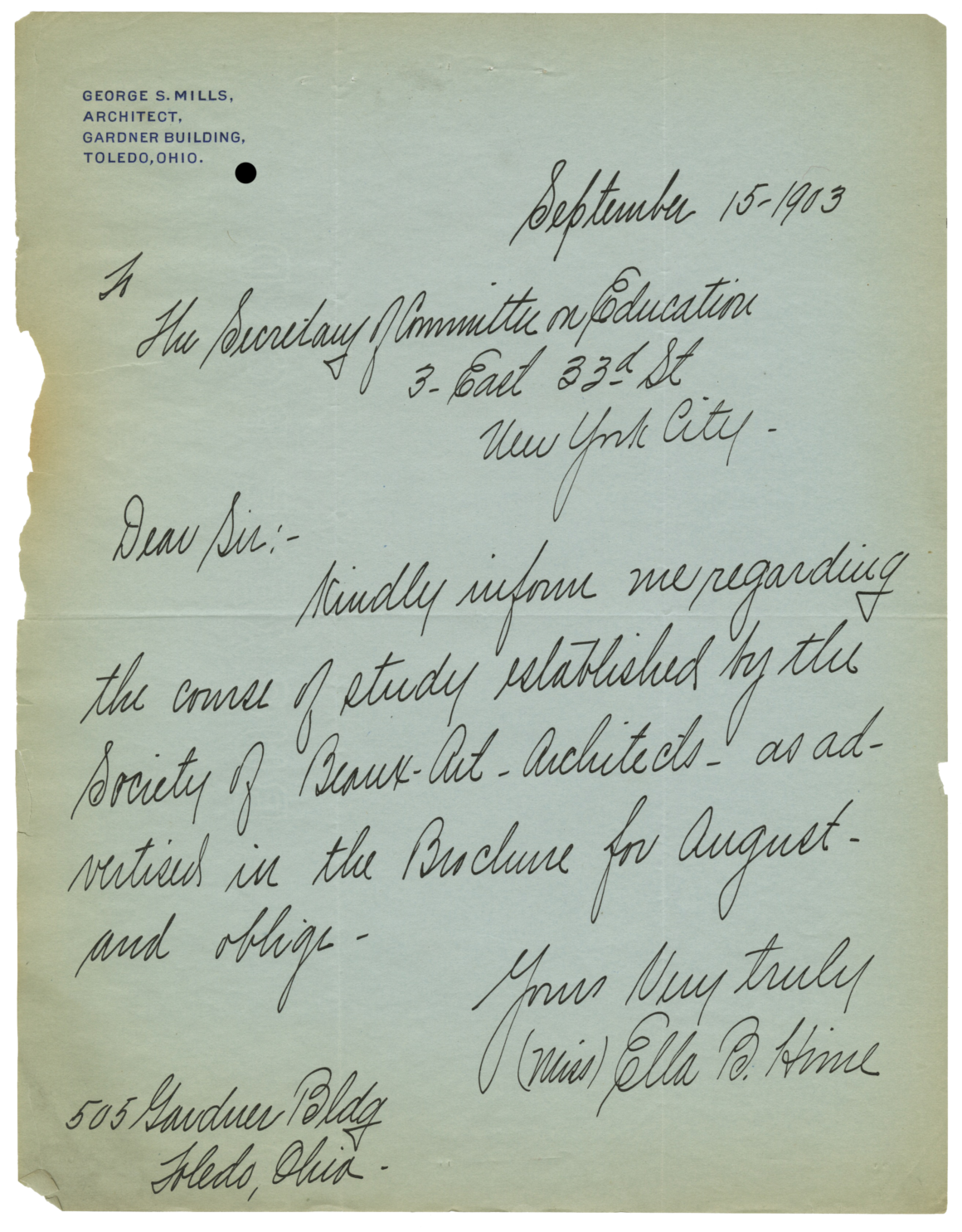
The SBAA's education program was open to all, and some women took advantage of this when local ateliers allowed them to do so. This letter, from a Miss Ella B. Hime of Toledo Ohio, is one of the earliest we have in our files.
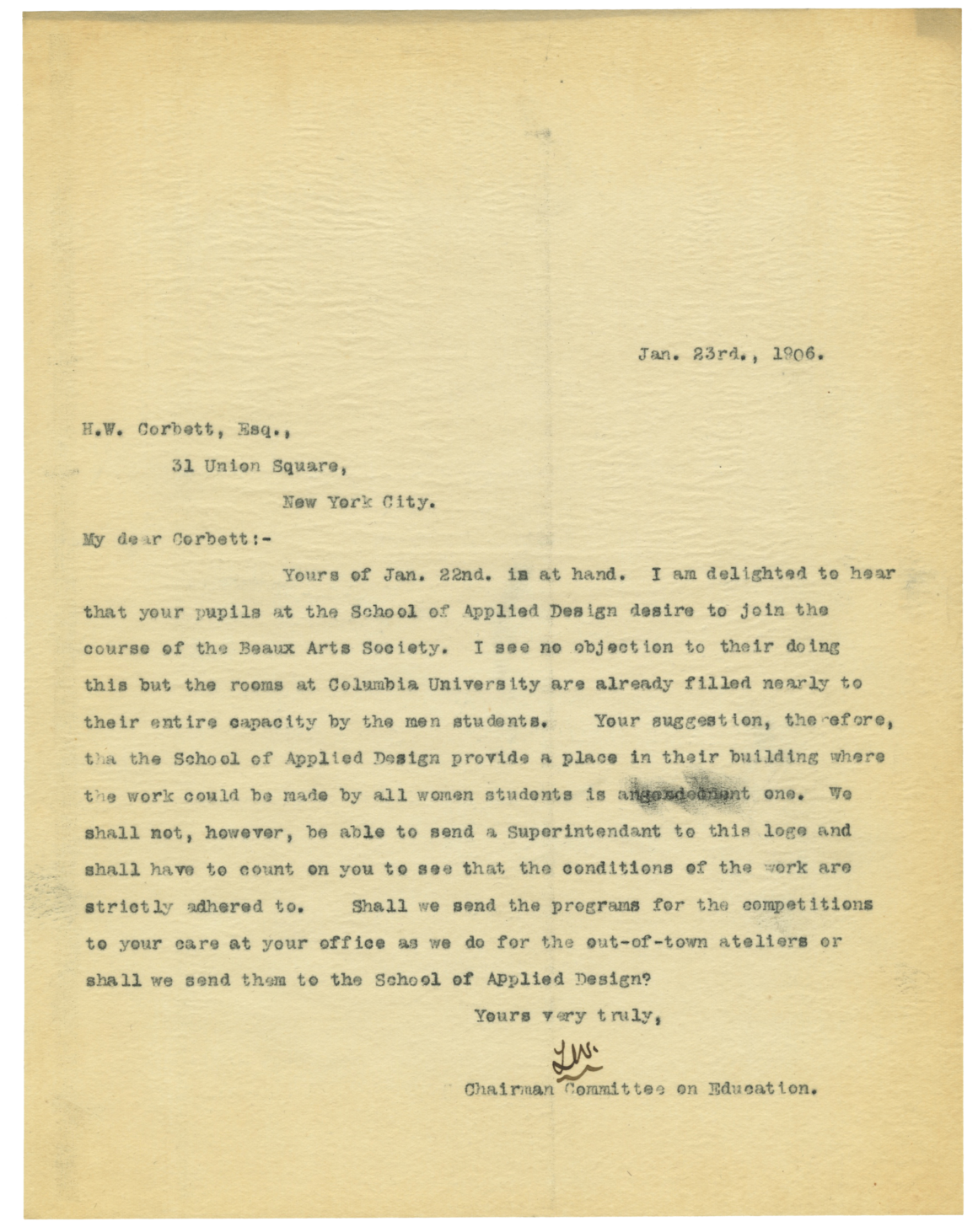
The New York School of Applied Design was founded in 1892 for women and ultimately became a part of today's Pratt Institute. Lloyd Warren, chairman of the SBAA's Committee on Education, was happy to allow the young women to follow the course of study, but suggested that the group be treated like an out-of-town atelier.

“…This particular problem came out of the night of a very important dance on the campus of our college, but we architects didn’t even realize there was a dance going on. A girl taking architecture misses lots of dances and parties and has to work awfully hard without the assurance of the boys that she will get her equal chance to make good. She has to be so much better than her competitors of the opposite sex to receive the same recognition…”

The Spiering Prize was set up by Mrs. Otto Spiering in memory of her son Louis, who died.
The BAID's Annual Meeting in 1946 included a joke "Body Beautiful" program, whose humor depends on one's taste for sexual innuendo.
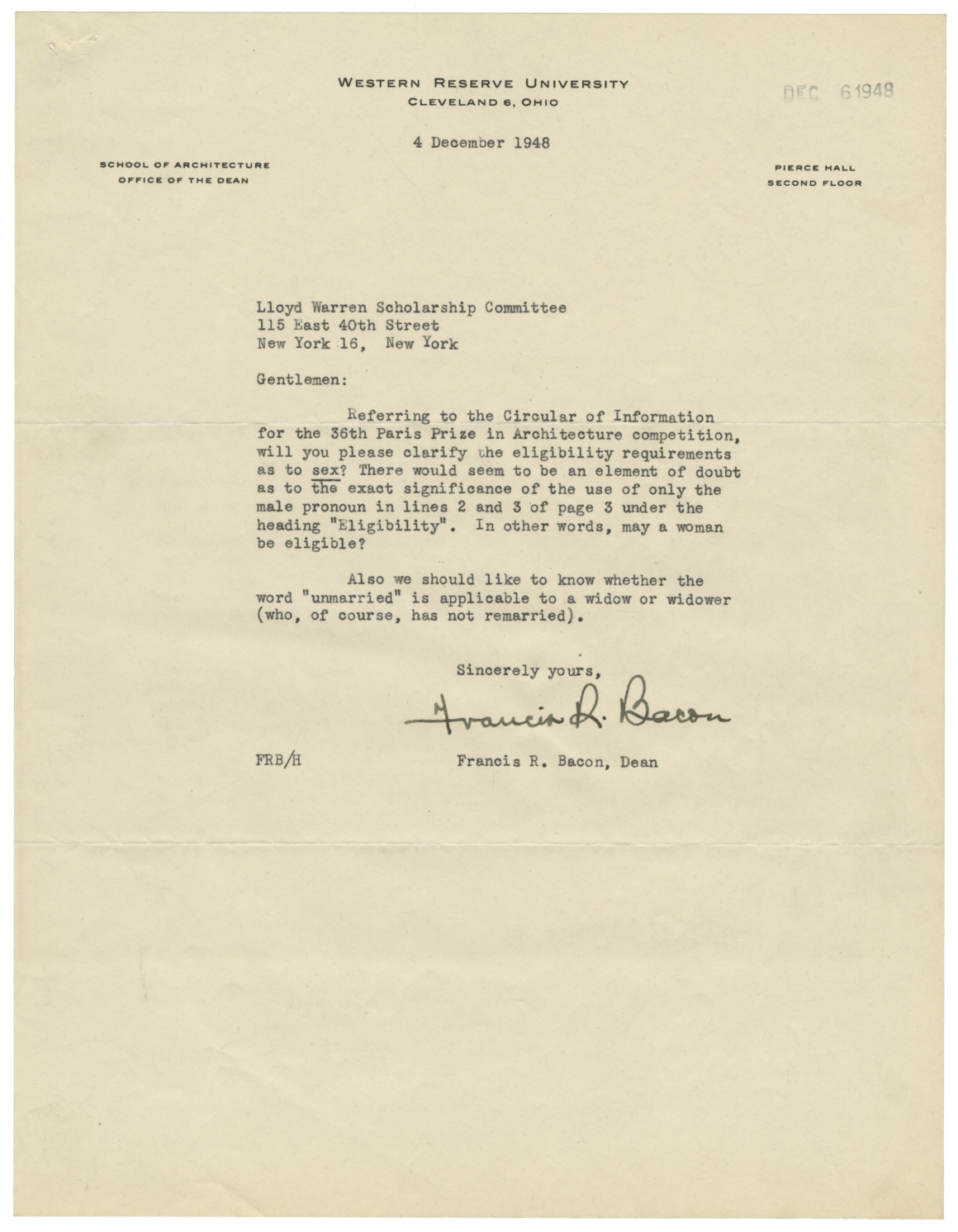
Response from BAID Education Committee chairman Bancel Lafarge to a letter from Francis Bacon, dean of the school of Architecture at Western Reserve University in Cleveland, OH
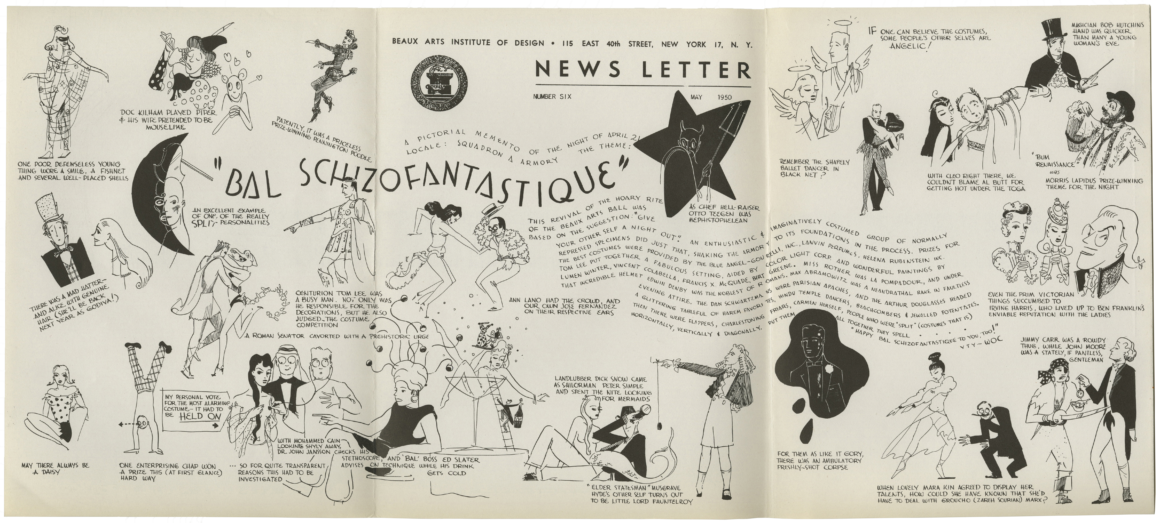
The 1950 BAID newsletter reported on the Bal Schizofantastique
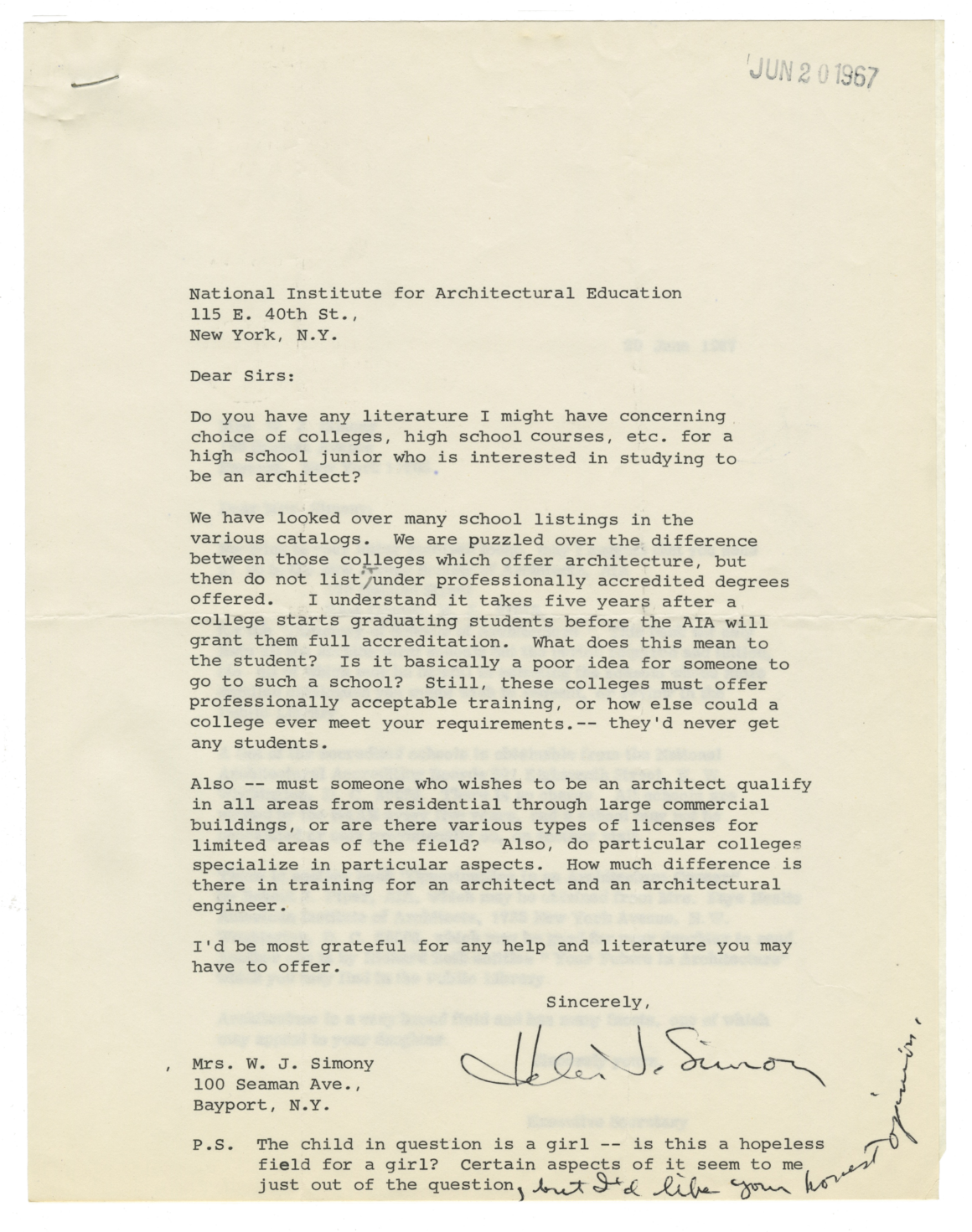
Postscript to a 1969 letter from a mother inquiring about the range of different architecture programs available for students.
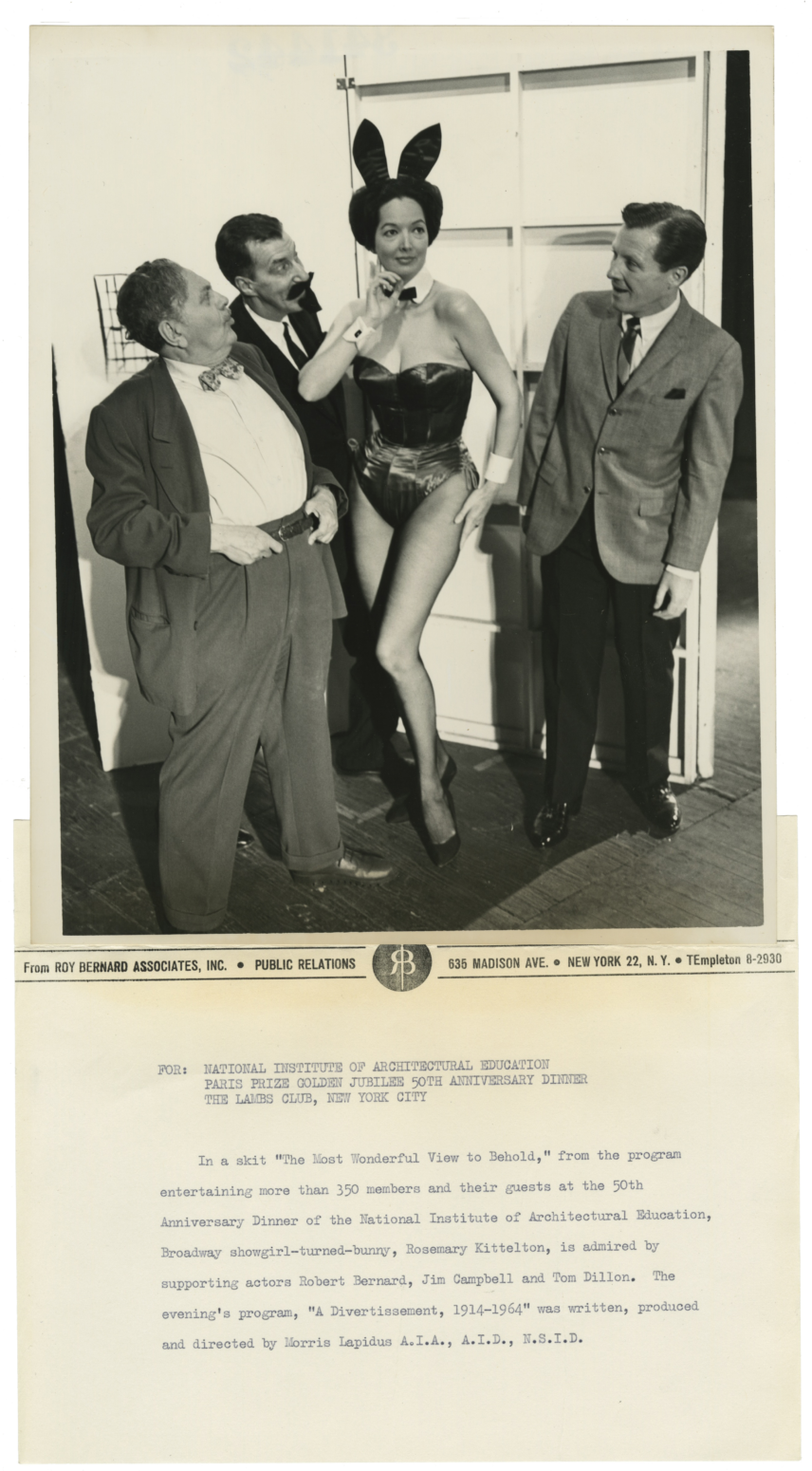
The architect Morris Lapidus wrote a skit for the 1964 Golden Jubilee dinner, which celebrated the 50th anniversary of the Paris Prize. (While the first prize was awarded in 1904, it was suspended during the two wars.)
Rosemary the Playboy Bunny who performed in Lapidus' skit.
By 1980, there were many more women studying architecture, but the male-female ratio in the NIAE's competition entrants remained approximately 5 to 1.

In its earliest days, the Society of Beaux-Arts Architects was unusual as an organization in that its education programs were, to all appearances, open to everyone. It was conceivable for a woman to win the Paris Prize, though it never transpired. Nevertheless, our archives unearth the women who regularly wrote in for the programs, who likely participated in ateliers in their own communities.

While women were few and far between in the architecture schools of the time, they pervaded the imaginations of the men who put together the Beaux-Arts Ball programs and other social events for the Institute. Lewd skits, songs, and cartoons abound the archival materials from these events.

As women made gains in the profession, the crudity of entertainment necessarily dissipated. The story of M.J. Long is an example of a female prize winner making her way as a young architect in the 1960s. By the 1990s, the scales had tipped so that the list of prizewinners nearly split between men and women.